Using photopolymers

30 12 2011

I have been using both Imagon-HD photopolymer film, and photopolymer plates. The latter has been the easier to use and more reliable, but the former more fun.  Both need exposing to UV light (I only have a black-light UV tube) through a line-art transparency, although in fact for the film I use images printed onto tracing paper. This is partly because the swanky do-it-all office photocopiers will no longer accept any old material to print on without your losing your insurance and maintenance contracts (and job probably). But my ancient printer works perfectly on tracing paper with no loss of quality in the exposed result.
P1000527 P1000507 P1000499 P1000475 P1000469

The three images on the left all use Imagon-HD film, which is a pre-sensitised gelatine product, glued onto metal stock with water and subsequently dried. The first is nickel silver subsequently etched in dilute nitric acid with text; the second shows nickel silver on top etched with a Greek key design, the bottom is a piece of copper still bearing the exposed and developed film; the third is a longer strip of nickel silver with exposed and developed film (but not yet etched).

The Fourth shows a piece of hammered brass on top, and a sintered fine silver pendent made from a photopolymer plate mold. This plate material, again a presensitised gelatine product (with an offensive and possibly somewhat toxic smell), after exposure to UV light hardens in such a way that it does not wash out in warm water. The parts not so exposed do however wash out. The result is a 3-D mold or stamp, which I used to form the sintered silver paste. After drying, this was fired in the usual way for such materials, then enamelled with aqua enamel at about 850°C.

The fifth picture shows the same fine silver pendent before enamelling, along with two examples of etching done by students in my jewellery class using resist paint on nickel silver; and some sintered silver fired pieces formed from commercial molds.


Tapered tube & rod

13 08 2011


I have never had any particular interest in tapered wire or tube until now, when I was shown some bangles and ear-rings, and realised I didn’t know how they were made.  I recently posted a query on Orchid / Ganoksin, and am currently waiting for information from more experienced metalsmiths.  The picture above left shows a solid silver-plated copper hoop, tapered smoothly in both directions, two solid tapered nickel silver finger rings, and a hollow 0.5mm-thick sterling ear hoop.  The picture on the right shows the ear hoop sawn in half, it can plainly be seen to have seams around the interior and exterior periphery.  However I have also been shown one that has only an interior seam.  Anyone give me some ideas of how these are made? By way of experiment, I hammered a 30x10mm cylindrical sprue of pewter into a double-ended spindle shape reminiscent of some of the crescent designs above, although I’ve not yet worked out how to hammer or press it into a crescent without damaging the cross section.


Making a hinged hollow ball

23 05 2011

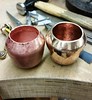
After seeing a very nice hinged ball containing a natural pearl, I thought I would try it.  It was easy making a hemispherical ball from rolled copper wire; 1.6mm copper wire was rolled to 1.8×1.0mm.  Three lengths of 30mm were sawn from this. Two were given a 45° chamfer at each end then soldered at one end.  The trident was then shaped round a 16mm dome and domed in a 19mm dome.  This was repeated with a second set of three strips to give two half-cages.  Each soldered triplet was soldered at the other end then again domed, but in a 20mm dome with an 18mm punch.  The cages looked very attractive, but the hard part is to try to find a way to hinge them neatly.  I subsequently soldered a small copper rectangle, about 4x5x1mm, to one end of one triplet.  This however proved not thick enough for drilling for a hinge.
110519_16 110519_19 110523_25


More etching

31 01 2011

By way of student demos, I rolled then etched the 2p bronze coin as shown sometime in the summer of 2010. This coin was one of my stash of pre-1992 coins which were entirely made of copper alloy; after that date, they are made of steel with a copper plated surface, and not so easy or safe in the rolling mill. After etching, I ‘enamelled’ it with coloured polyester resin. Although there are many adherents of using various acid and peroxide mixes for etching of copper, I find that ferric chloride solution (with or without the addition of citric acid) has fewer problems. In particular, no nasty fumes, and much less deterioration of the resist (which in my case is usually tinted shellac in alcohol).
DSCF2163b DSCF2171b


Testing for nickel

13 12 2010

The standard qualitative test for nickel is to use a solution of DMG (dimethylglyoxime). I followed the instructions in Hoke for making 20ml solution of DMG (dimethylglyoxime) in distilled water, boiling it for some time. However it deposited a bunch of crystals, and on checking online I find that it is ‘virtually insoluble’ in cold water;DMG Merck for example says solubility is 0.6g/l. I find it inexplicable that Hoke should seem to be inaccurate on this matter. The supernatant liquid reacted with some strong nickel chloride (plating solution) to give a very faint pink precipitate. Things were (literally) much rosier when I added methylated spirits to the residue DMG crystals as well as water, to get a much stronger solution. This precipitated a heavy deposit of beetroot-red organometallic complex (see picture left), with, strangely, no trace of colouration in the supernatant liquid of the methylated spirits dye, which seemed to have ‘complexed out’ of it at the same time. Apparently the DMG solution needs to be not too acidic in pH for the test to work; better for it to be slightly alkaline. In more strongly acid solution, the same reagent is apparently a useful test for palladium, with which it gives a canary-yellow precipitate (which I have not tested).  More information can be found from people who test meteorites; who variously suggest that the DMG should be dissolved in methanol at 10gm/litre, and that the results can be masked by many other metallic ions, especially cobalt.


Silversmithing at London Met

8 09 2010

I signed up for ten 1-day sessions of silversmithing at Sir John Cass Faculty of Art, Media and Design, a school within London Metropolitan University. The sessions were tutored by Steve Wager, and financed for me by London Central YMCA as part of my continuing professional development. Sign of the times; I signed up together with only two others, both young women in their twenties. Also on the course however were a dozen or more ‘old timers’ fairly evenly split between the sexes and mostly over fifty years old (but still mostly younger than me!).  I have put my full course notes in this link

DSCF2180b DSCF2199b

I found my time there hugely enjoyable, and ‘bashed out’ my first bowl from 1mm gilding metal (first & last stages shown above), followed by a spoon in copper,

DSCF2189b DSCF2201b

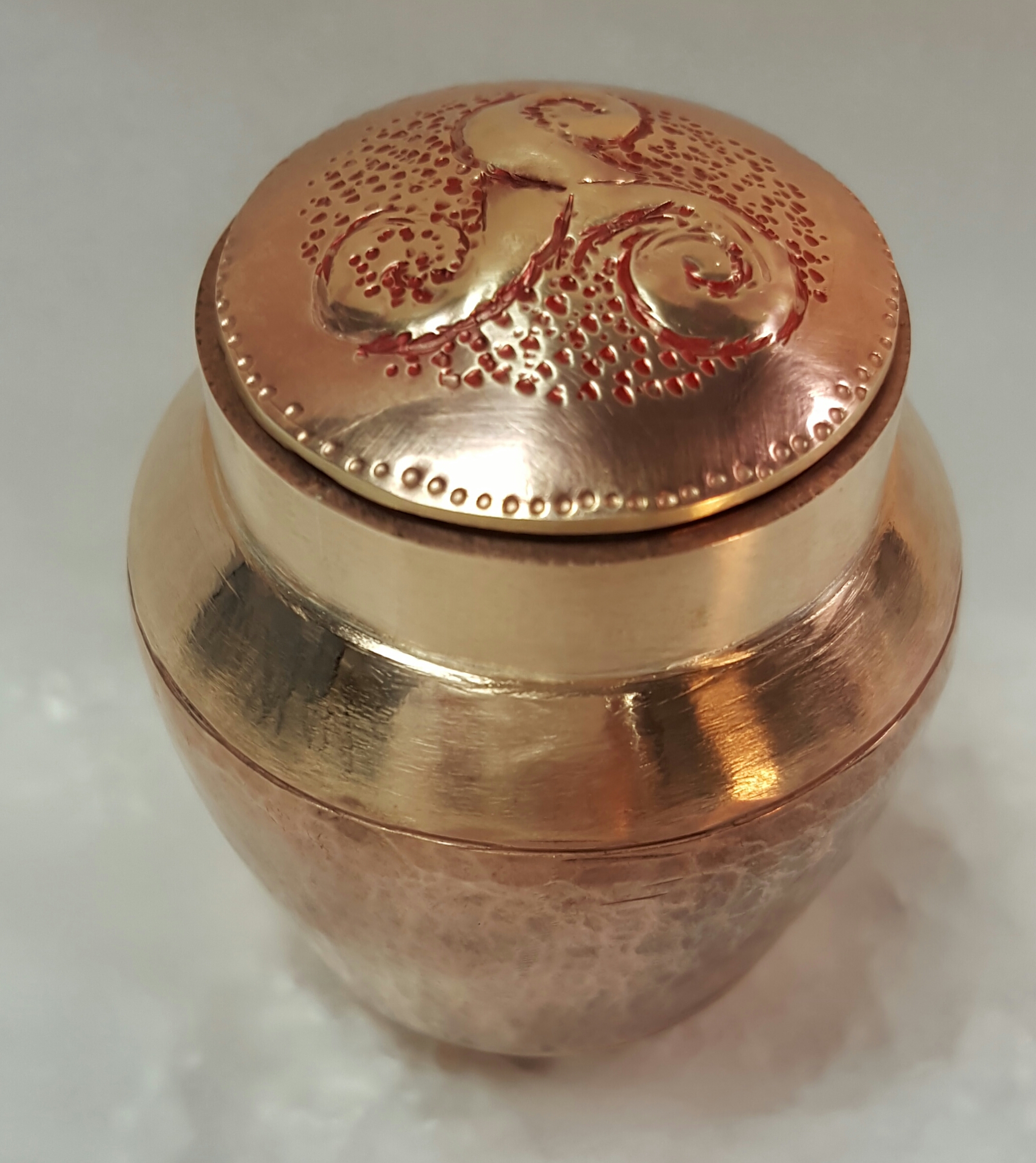
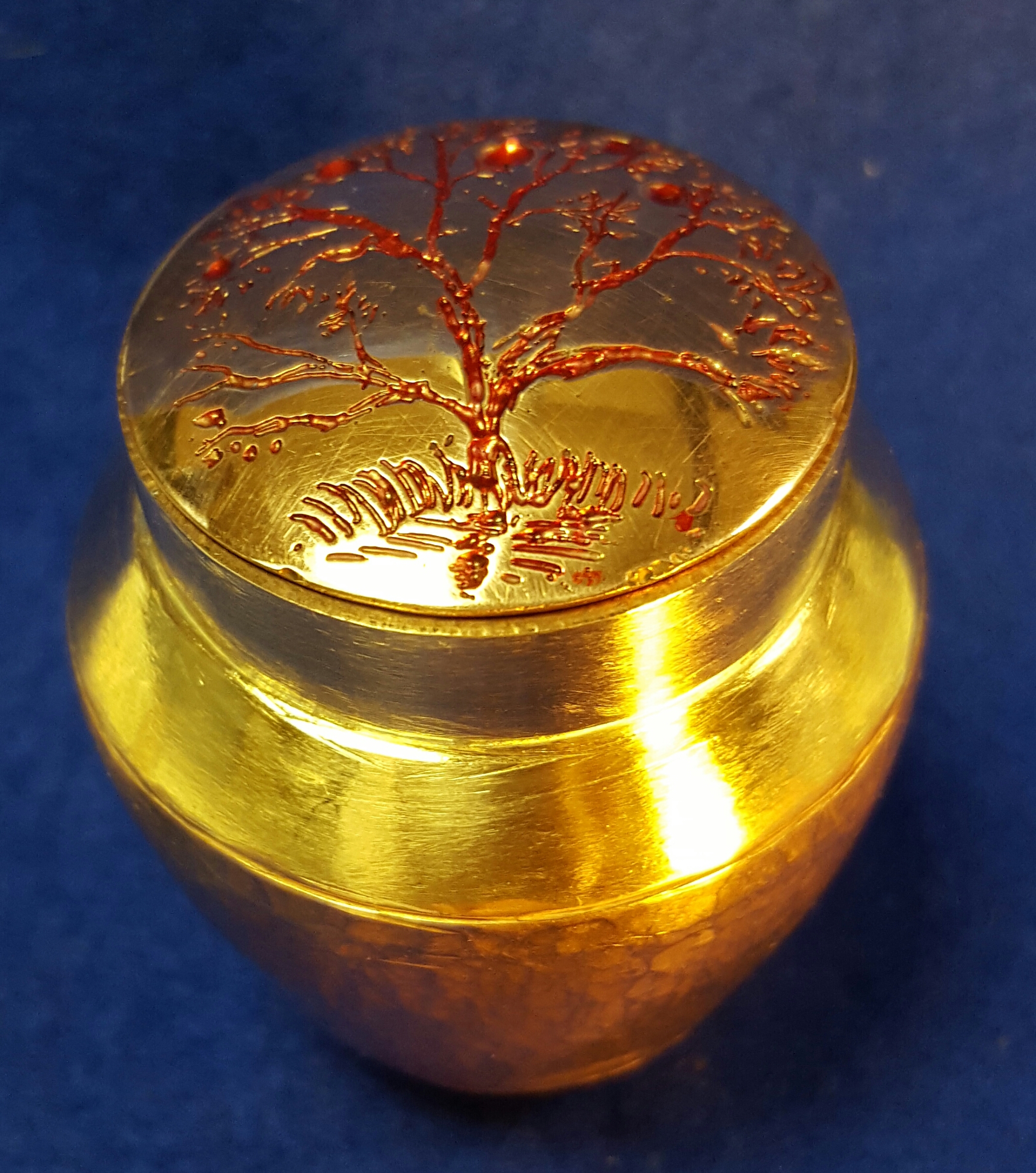
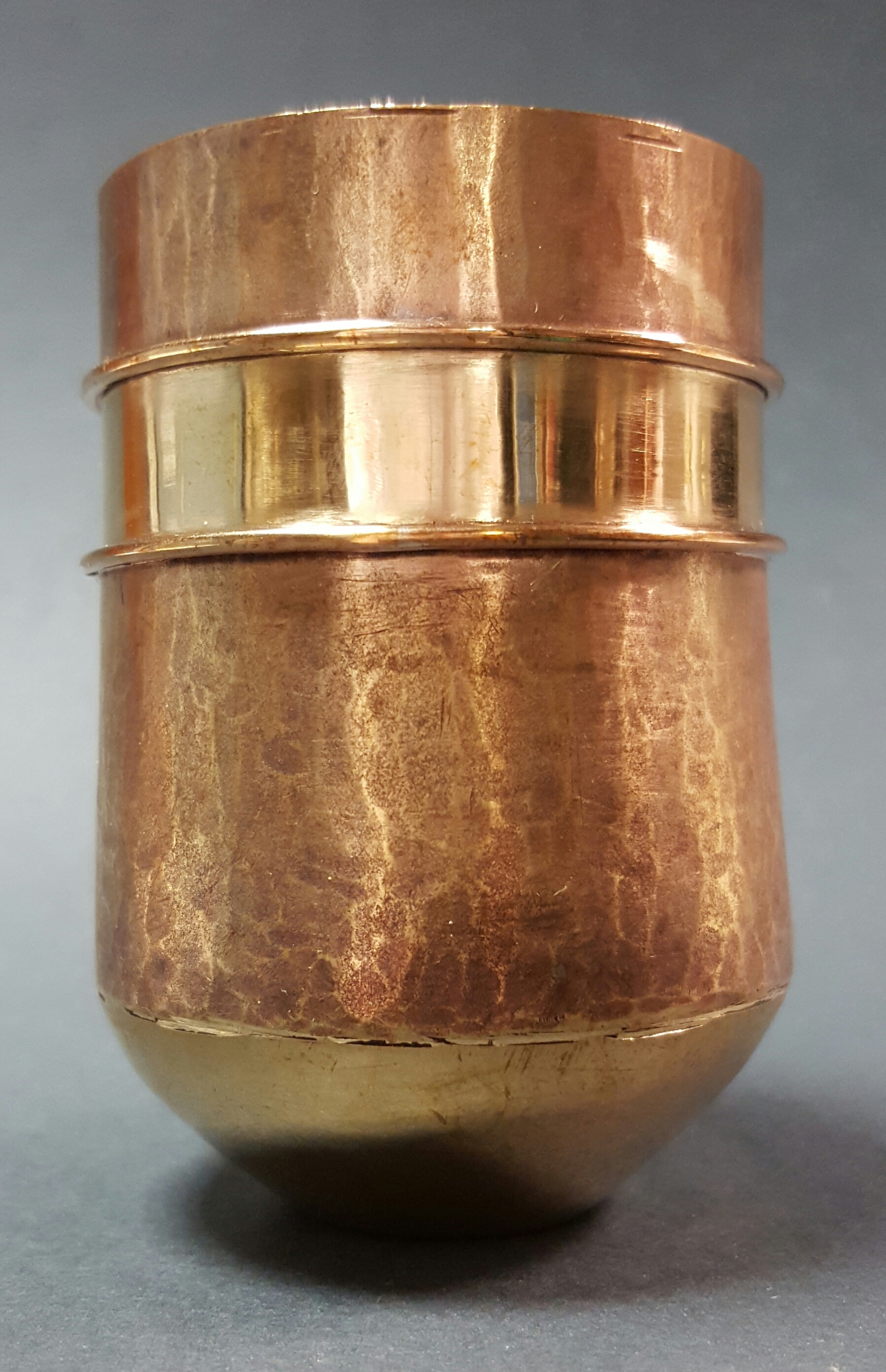
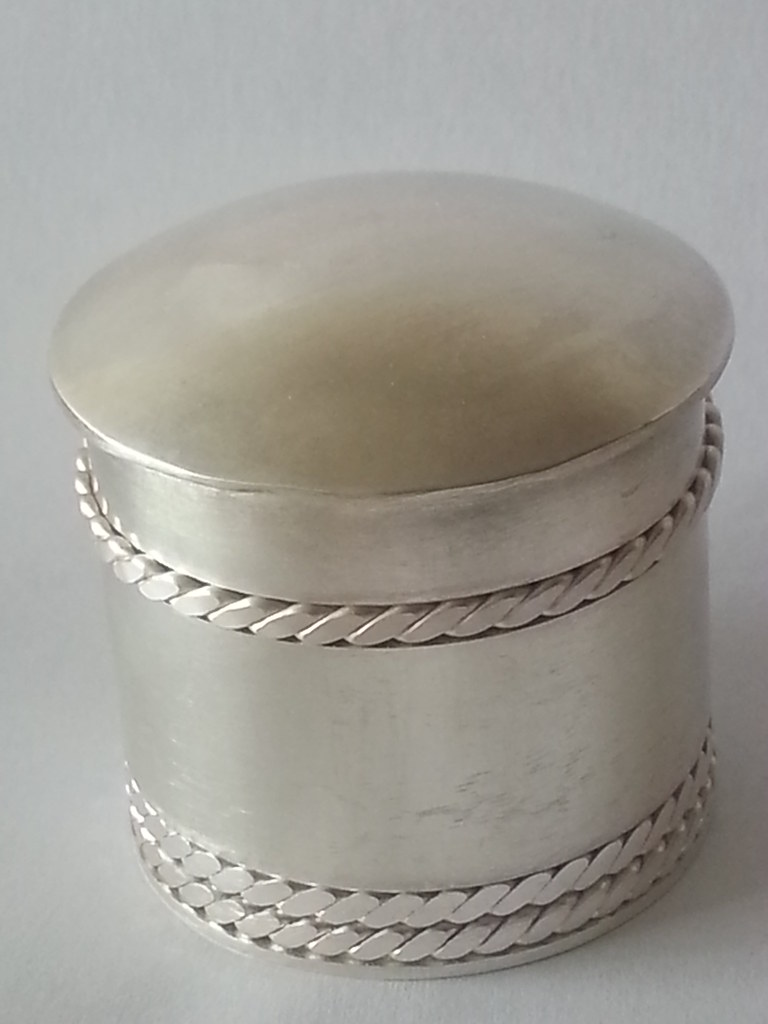
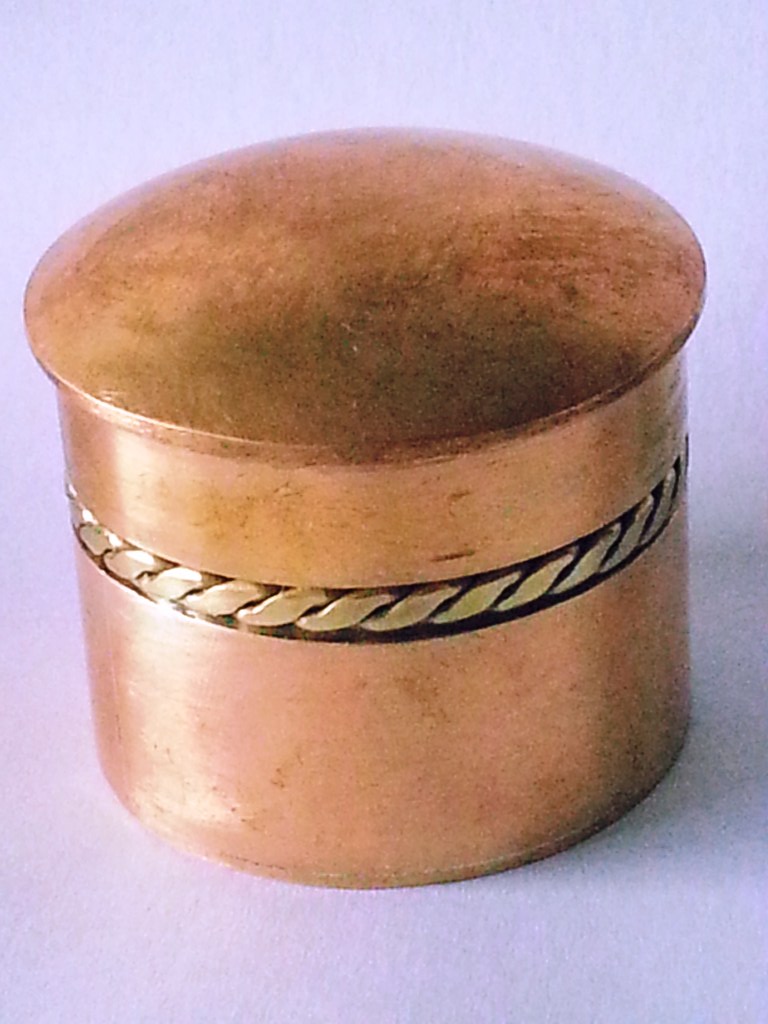
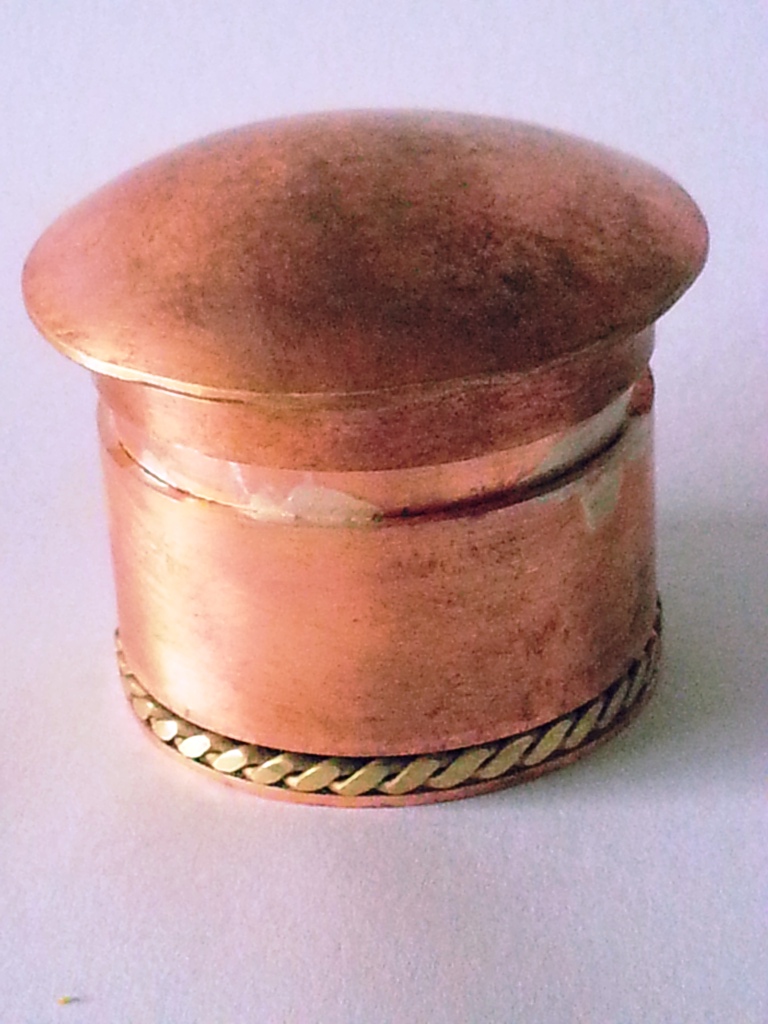
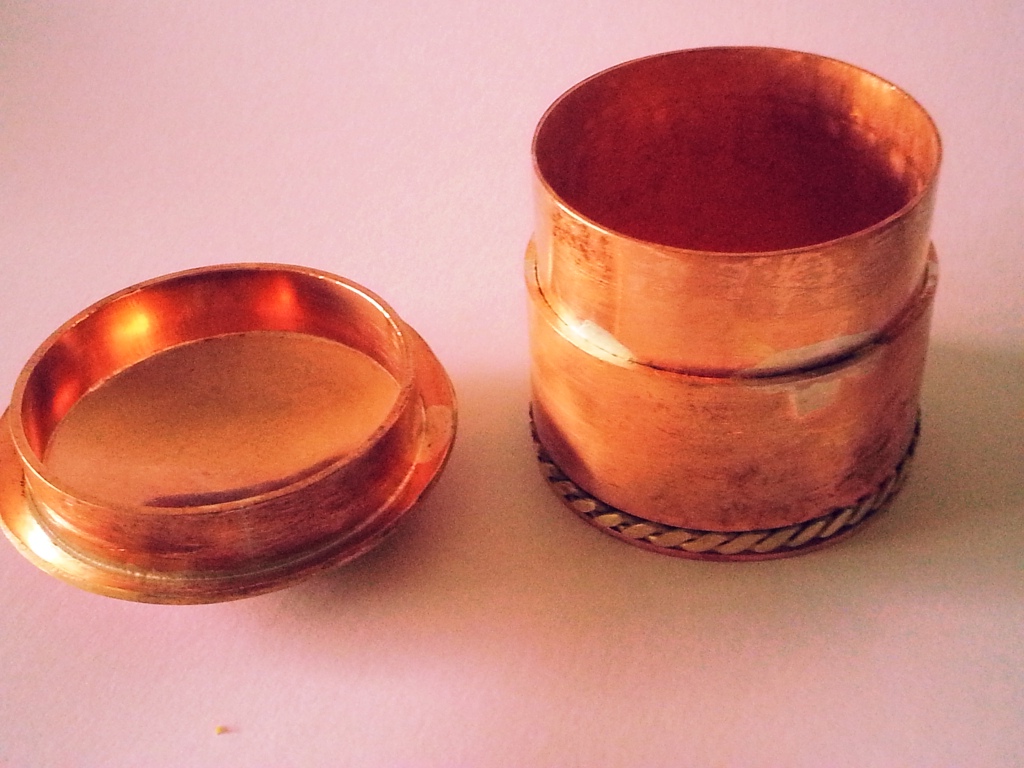
then a pill-pot in gilding metal;

DSCF2255b DSCF2264b

I also made a start on a larger bowl, and independently hammered a scrap silver sprue into a small spoon. I’m planning to take the Autumn term starting in early October.


Discriminating between diamond and CZ

20 01 2010

After a tip from Orchid, I placed a 2.5mm CZ and a 2.5mm diamond face-down on a sheet of white paper which had had fine alternating-colour lines drawn along it.  On careful inspection with a loupe, it was apparent that one couldn’t see the coloured lines through the diamond, but they were somewhat visible, though distorted, seen through the CZ.  Although this obviously cannot be shown with a static picture, in fact the difference is fairly plain if one moves from side to side a little when viewing the two types of stone. The implication, in addition to giving a test for discriminating between the two materials, is that light passes from the back to the front, then gets reflected from the lined paper, before passing again to the back and out to the eye.  One wonders what difference there might be if both stones were laid face-down on a light box. 

Diamond & CZ

Seeing stripes below stones...

I also tried adding a fine-silver backing to a CZ, mindful of the beauty of Swarovski crystal. The result was very disappointing; the translucent quality of the CZ was replaced by a sense of rather dirty grey in some of the darker areas, though the general amount of light reflected didn’t seem affected. I’m pretty sure there’s a good reason why no-one sells foil-backed CZ…


Some ins-and-outs of twisting sterling square rod

8 12 2009

I decided to move the content of this post to the Metalsmithing/Rings page; see links at right→


Making a rotary burnisher from an Allen key

2 12 2009

After a tip published in Orchid by J Morley in 2004, I used an alumina separating wheel to shorten the shorter end of a 7/64″ Allen key to about 1cm, and used the same wheel to roughly grind the end to a dome. Later I discovered that this latter operation was probably a waste of time, a better way was to fit the Allen key into the pendent drill and rotate the cut end against progressively finer grades of wet abrasive paper. This had the great advantage of producing a profile (providing the drill was slowly lifted and lowered to additionally shape it in another plane) which is maximal size for burnishing. The result was a very attractive looking tool, requiring no heat treatment (the same tool can be made using a bur, but this requires heating, bending, shaping, re-hardening then tempering – a lot more work).
Unfortunately, actually using the tool is a different matter. I tried it on various old pieces of cast silver with porosity, and although it bashed the surface very satisfactorily, not all porosity was closed up, and I was uncertain how to finish the resultant surface. I tried the abrasive radial wheels which did indeed get a wonderful polish, but did not remove undulations in the surface caused by the rotary hammering effect. It is faintly possible that my method of getting a maximal size burnishing surface is at fault, perhaps a much smaller burnishing surface would get better results. Of course, I realise that if nothing else, it may be useful as a power texturing tool!


Making & using plaster gems with PMC

23 11 2009

Although CZ and many other gemstones can be successfully fired into PMC, I often find that the brilliance (at least of CZ) is slightly diminished by this process. So I made a flexible rubber mould of some 5.5×5.5mm CZ hearts, then cast the pavilions using a fairly hard casting plaster. Each tended to have a small missing piece at the point of the pavilion due to an air bubble, but this proved not to be a problem. When well dry, they were embedded at girdle height in plastic PMC shapes (themselves embedded in flexible rubber moulds), the whole de-moulded, dried and fired at 800C. This higher temperature possibly helped to denature the plaster sufficiently that it was easy to clean out from the cured (i.e. sintered) PMC. It would only remain then to set the coloured CZ hearts using a spot of glue. However that is not what I actually did – on a whim, I melted dichroic glass fragments into the heart-shaped cavities in some samples of the uncured PMC, whilst also firing some 15mm PMC heart shapes with 5.5mm heart-shaped coloured CZ embedded in the uncured (unsintered) silver. In the side-bar to the right, you will see examples of the fired-in-place CZ (right-most two hearts, amethyst and orange respectively) along with the left-most three specimens which had variously coloured dichroic glass pressed in them while red-hot and fluid.


Follow

Get every new post delivered to your Inbox.